Type @
Type @ anywhere in a note — or [[, if brackets are the habit you already have — and the picker opens inline. Keep typing to filter.
New in Piper
Everything in Piper is a connectable object, leaving you with deeper understanding.
Wikilinks are not new. What is unusual is what you can point them at. Most tools let you link a note to another note, because notes are the only thing they hold. Your reading lives somewhere else, in an app that does not know your notes exist.
In Piper it is one vault, so a link can reach anything in it. A note can point at a chapter you are still reading. A highlight from March can point at the note you started in July. A course is just sources gathered into an order, so it links like anything else.
Link what you read, not just what you wrote.
Linking works the moment you open the notebook. There is nothing to enable.
Type @ anywhere in a note — or [[, if brackets are the habit you already have — and the picker opens inline. Keep typing to filter.
The picker searches the whole vault at once, your reading alongside your writing. Pick a result, or name something you have not made yet.
Open whatever you linked to and your note is already listed there, under Linked References. You never file the same thing twice.
Name the thing while the thought is warm, before you have written the page it belongs to. Piper keeps that as a real link, searchable and countable, pointing at nothing. Write the page a week later and every reference that was waiting on it resolves at once.
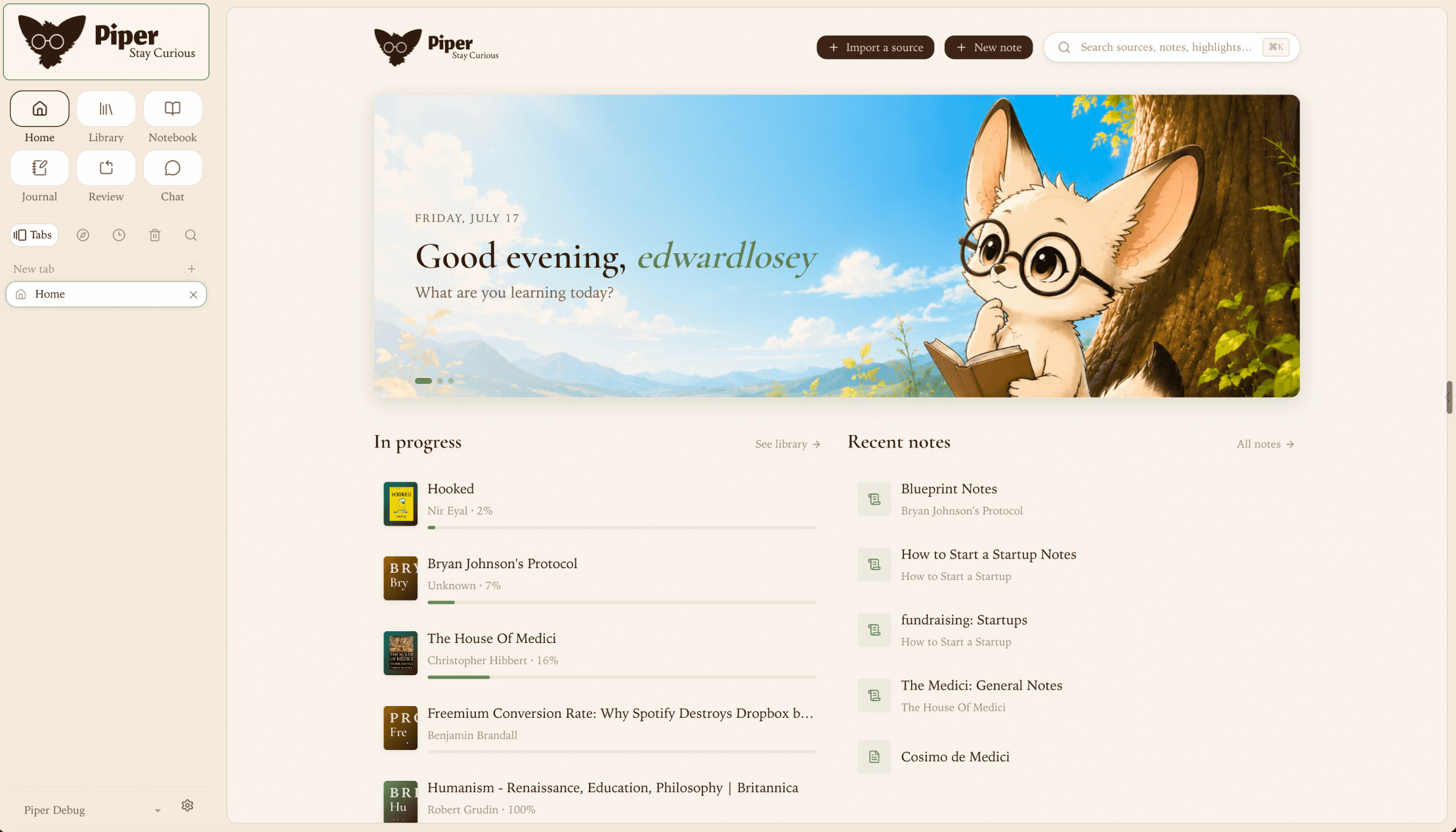
You will not call it the same thing twice. Give a source or note as many aliases as it earns, and Piper watches for them in your prose and offers to link the ones you meant — so the shorthand you typed in a hurry still finds the page you filed it under.
The graph draws the vault as it actually is, with controls for depth, direction, and spacing. Follow one thread outward from a single source, or pull back far enough to see the clusters you did not know you had been building. On desktop today; mobile is catching up.
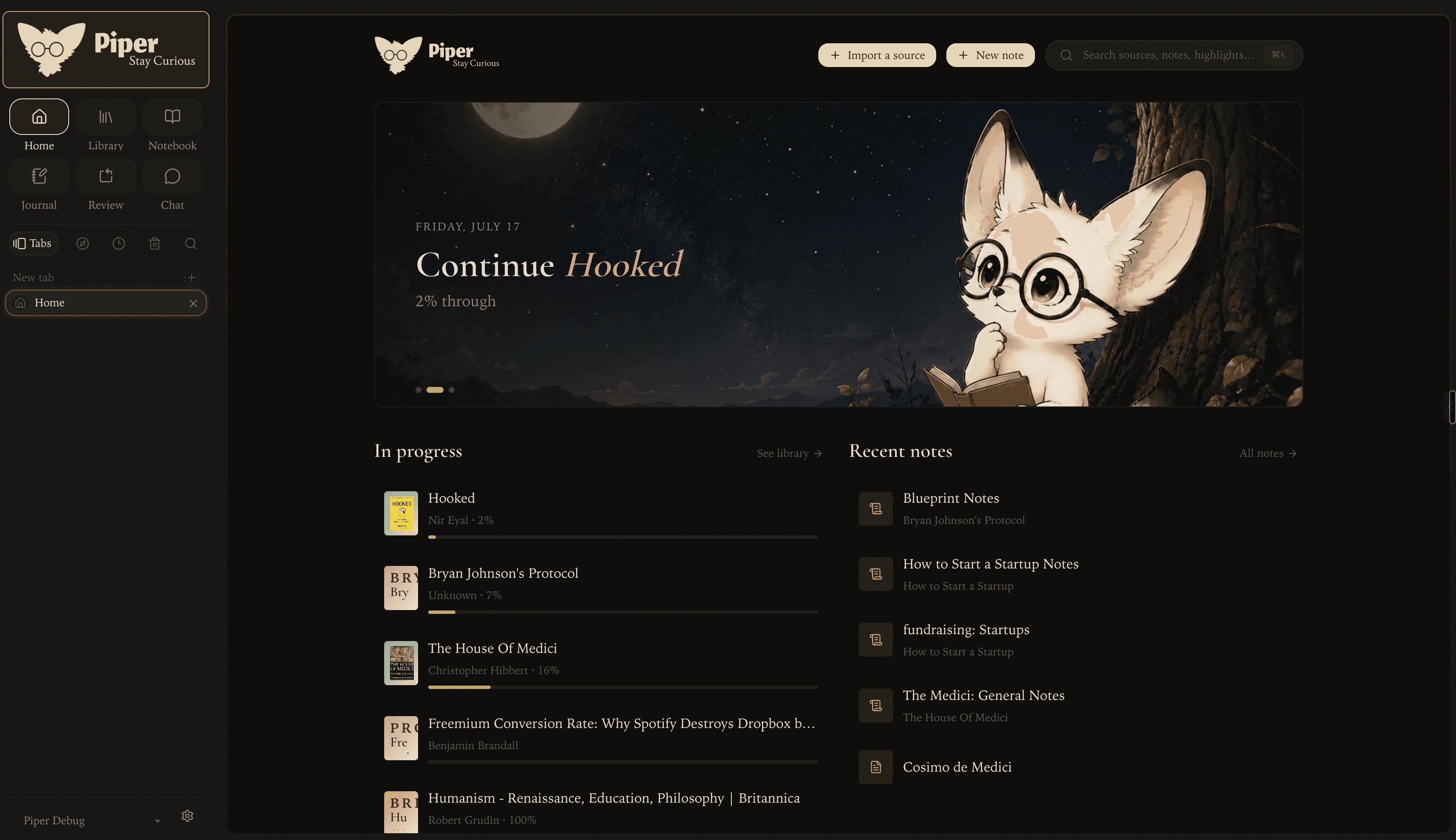
Piper links to identities, not to titles. Rename a source, retitle a note, restructure a course — your prose is never edited on your behalf, and every link still points where you aimed it. Tools that link by filename have to rewrite your files to keep up. Piper has nothing to rewrite.
Search reaches your reading and your writing at the same time. You never have to remember which of them you put it in, which was the whole problem.
Press ⌘ K anywhere in Piper, or Ctrl K on Windows.
Signed desktop downloads are not available yet.
Download and update checks contact Piper's public release service. They send ordinary network request information, never your Vault or what you read and write.